

Back Pain in Pregnancy: Causes, Relief, and How Physiotherapy Can Help

Woman feeling pain in her spine
If you’re pregnant and battling back pain that turns simple tasks into a challenge, you’re not alone — and the right support, including physiotherapy, can make a world of difference.
Why Back Pain Happens During Pregnancy
Back pain in pregnancy is incredibly common — studies show up to 70% of expectant mothers experience it, especially in the lower back or pelvic region.
It happens because of hormonal shifts, posture changes, and increased physical load that affect your spine and joints.
Your body produces relaxin, a hormone that loosens ligaments to prepare for birth (so the baby can get out through the pelvis). While this is important, it can make joints less stable and muscles work harder.
Other common causes include:
- Postural shifts: As your bump grows, your centre of gravity changes, adding strain to your lower back.
- Muscle separation (diastasis recti): Your abdominal muscles stretch, weaken and separate, reducing stability.
- Pelvic girdle pain (PGP): Loosened joints around your pelvis can cause pain or clicking sensations.
- Weight gain: Added weight increases spinal pressure and fatigue.
Key takeaway: Most back pain in pregnancy comes from normal body changes — but with proper care, it doesn’t have to limit your comfort or movement.
How Physiotherapy Can Help With Pregnancy Back Pain
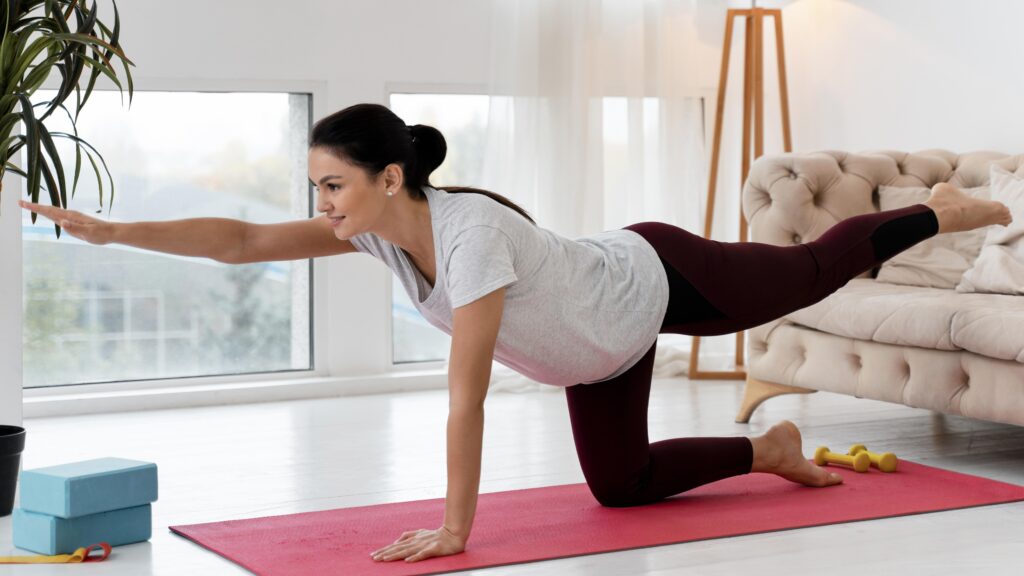
Physiotherapy is one of the safest, most effective treatments for back and pelvic pain during pregnancy.
A physiotherapist can guide you through safe exercises and hands-on care tailored to your body’s changes.
- Personalized Exercise Programs
A physiotherapist designs gentle, targeted exercises to strengthen your core, glutes, and back muscles.
This helps your body support your growing belly and reduces strain on your spine.
Examples include:
- Pelvic tilts
- Wall slides
- Stability ball exercises
- Gentle bridges
- Pelvic floor exercises
- Posture and Movement Coaching
Physios teach you how to sit, stand, and move in ways that reduce pressure on your back and pelvis.
They’ll also show you ergonomic tips for lifting, sleeping, and daily movement to minimize strain.
- Hands-On Treatment
Physiotherapists may use manual therapy techniques such as gentle joint mobilizations or soft tissue massage to relieve tension and improve mobility. Dry needling is also an option after 12 weeks.
- Supportive Devices and Education
Your physio might recommend:
- Maternity support belts for pelvic stability
- Pillow positioning tips for better sleep
- Taping techniques to relieve pressure
- Ergonomic advice to reduce strain
Key takeaway: Physiotherapy helps relieve pain, strengthen your body, and prepare you for a smoother pregnancy and postpartum recovery.
Home Remedies and Daily Habits That Support Recovery
Even outside of physio sessions, small daily changes can make a big difference.
Stay Gently Active
Try low-impact activities like:
- Prenatal yoga or Pilates (approved by your physio or doctor)
- Walking or swimming
- Pelvic tilts and mobility stretches
- Avoid exercises that strain and cause the abdominals to separate (like sit ups)
Sleep Smart
Sleep on your side — preferably the left — with a pillow between your knees and one under your belly to maintain spinal alignment.
Heat and Massage
Use a warm compress (not hot) or get a prenatal massage to ease tight muscles and improve circulation.
Key takeaway: Consistency is key — small, safe daily habits support your physiotherapy results and reduce discomfort long-term.
When to See a Healthcare Provider
While mild back pain is normal, seek medical attention if you experience:
- Sudden or severe pain
- Pain with fever or urinary symptoms
- Numbness, tingling, or weakness in your legs
- Rhythmic lower back pain (possible early labor)
Always check with your healthcare provider before starting any new exercise or therapy routine.
FAQs About Back Pain and Physiotherapy During Pregnancy
Q: Can physiotherapy help with back pain in pregnancy?
Yes. Physiotherapy is a safe, evidence-based approach that helps reduce pain, improve posture, and strengthen your body during pregnancy.
Q: Is it safe to see a physiotherapist while pregnant?
Absolutely. Qualified physiotherapists are trained to treat pregnant clients safely and effectively.
Q: What can I do at home to ease back pain during pregnancy?
Stay active with gentle movement, maintain good posture, use supportive pillows, and apply warm compresses. A physio can personalize your plan.
Q: Does physiotherapy help after childbirth too?
Yes — postnatal physiotherapy supports recovery by restoring core strength, pelvic floor function, and spinal alignment.
Final Thoughts
In summary, back pain in pregnancy is common but treatable. With the right mix of physiotherapy, daily movement, and self-care, you can stay active, comfortable, and strong throughout your pregnancy journey.
I’m Katherine Tait, and I write about pain, physiotherapy, and evidence-based strategies for a stronger, pain-free life.
Explore more insights and resources at www.tableviewphysio.com